
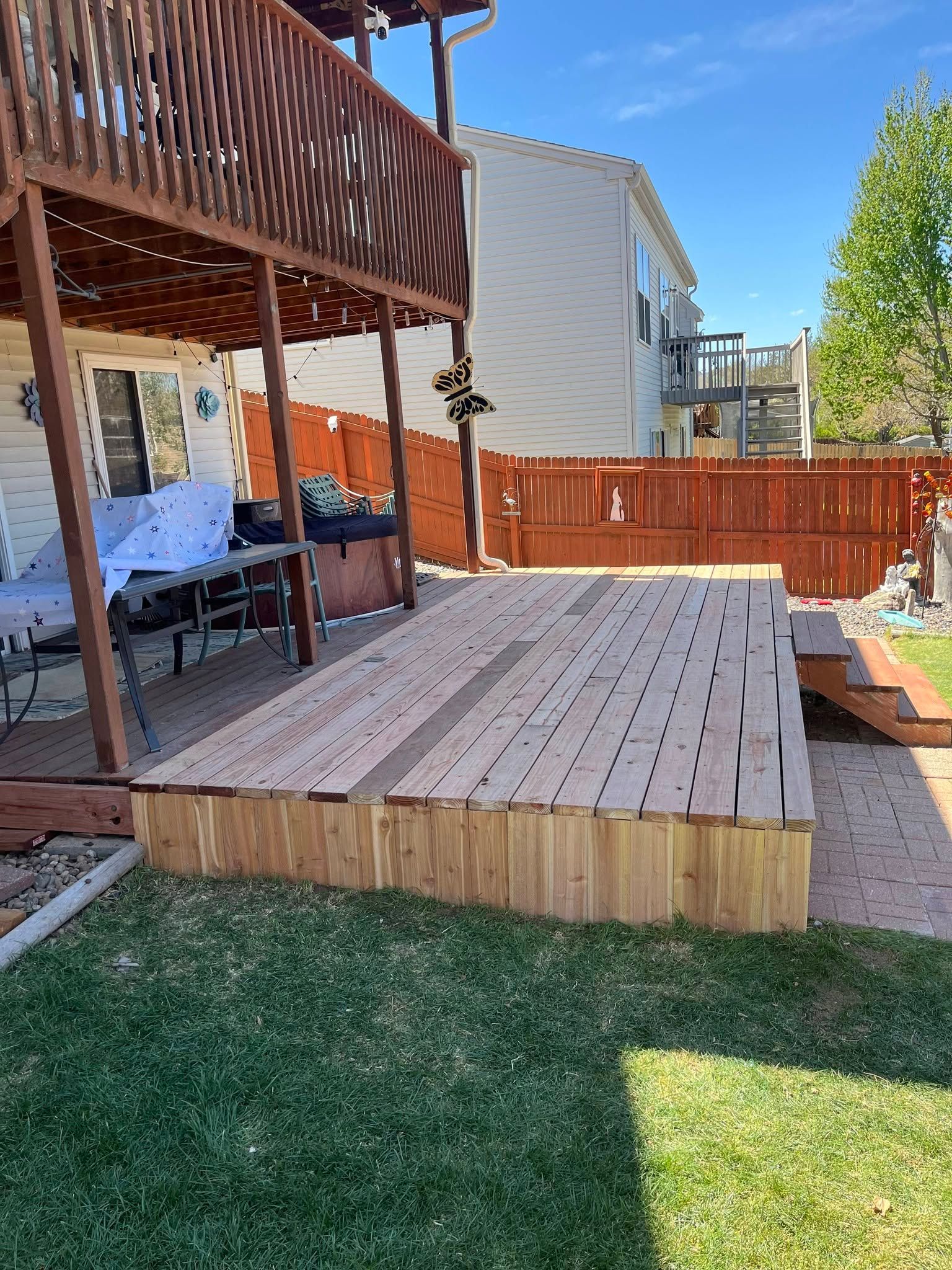
Outdoor Spaces Built for Extreme Weather
Deck Builds in Harrisburg for properties facing South Dakota's freeze-thaw cycles
M&A Handyman and Remodeling designs and builds residential decks in Harrisburg with material selection and installation techniques specifically chosen for South Dakota's winter freeze cycles. Every deck project addresses how moisture, ground movement, and temperature swings affect structural integrity—from post setting depth to lumber grade selection. The work focuses on preventing the premature warping, cracking, and frost heave that cut short the lifespan of improperly built outdoor structures in this climate.
The build process starts with design consultation where you compare pressure-treated versus composite material performance under local conditions, followed by code-compliant post and railing installation that accounts for frost line requirements. Each phase—from framing through final stain application—addresses how seasonal expansion and contraction affect fastener choice, board spacing, and finish adhesion.
Schedule a property evaluation to assess site-specific drainage and exposure factors affecting your deck design.
Why Owner-Built Decks Perform Differently
The owner personally leads every aspect of framing and finishing rather than assigning work to rotating subcontractor crews. This direct involvement means material decisions—such as choosing specific lumber grades that resist cupping in humidity or selecting fasteners that won't back out during freeze cycles—are made by someone who will see the deck through completion and stand behind the results years later.
After installation, you'll notice boards that remain flat and secure through seasonal temperature shifts, railings that stay solid without wobble, and stain coverage that resists peeling when spring moisture arrives. M&A Handyman and Remodeling controls quality at each step because the same person who selects your joists also applies your finish coat.
The scope includes structural framing, decking installation, railing systems, and protective finish application. Post setting depth and concrete footing specifications adjust based on soil type and drainage patterns observed on your property, ensuring the foundation resists frost heave that would otherwise shift the structure over winters.
What Homeowners Ask Before Starting
Deck projects in Harrisburg raise questions about materials, timing, and what the structure will need over time. These answers reflect how local conditions shape every build decision.
What's the difference between pressure-treated and composite decking in South Dakota weather?
Pressure-treated lumber costs less upfront and tolerates freeze-thaw cycles without cracking, but requires periodic staining and sealing to prevent moisture absorption and surface degradation. Composite resists rot and doesn't need refinishing, but expands and contracts more visibly in extreme temperature swings, requiring specific fastening techniques and gap calculations that account for seasonal movement.
How deep do deck posts need to be set in Harrisburg?
Posts must extend below the frost line—typically 48 inches in this region—and sit in concrete footings that prevent heaving when ground moisture freezes and expands during winter months. Shallow post setting leads to structural shifting that throws railings out of plumb and creates gaps between boards within two to three freeze cycles.
When is the best time to build a deck in South Dakota?
Late spring through early fall provides stable ground conditions for post setting and allows stain or sealant to cure before freezing temperatures arrive. Winter builds are possible but require longer concrete curing times and may delay finishing work until temperatures consistently stay above freezing.
What maintenance does a new deck require after installation?
Pressure-treated decks need cleaning and resealing every two to three years to prevent moisture penetration that causes surface cracking and wood rot. Composite decks require less frequent maintenance—primarily cleaning to remove debris that traps moisture—but fasteners and flashing should be inspected annually for rust or loosening caused by material expansion.
How long does a properly built deck last in this climate?
A deck built with correct post depth, appropriate lumber grade, and climate-specific fastening should provide 20 to 30 years of use before structural components need replacement. Surface boards may require earlier replacement depending on sun exposure, moisture exposure, and maintenance consistency, but the frame and support structure remain sound when installation accounts for frost movement and drainage.
M&A Handyman and Remodeling brings 35 years of framing and construction experience to every deck project, ensuring your outdoor space handles the specific demands of South Dakota weather. Request a detailed estimate that includes material options tailored to your property's exposure and your long-term maintenance preferences.