
Decks That Survive Another Dakota Winter
Deck Repairs in Harrisburg for structures showing freeze-thaw damage and fastener failure
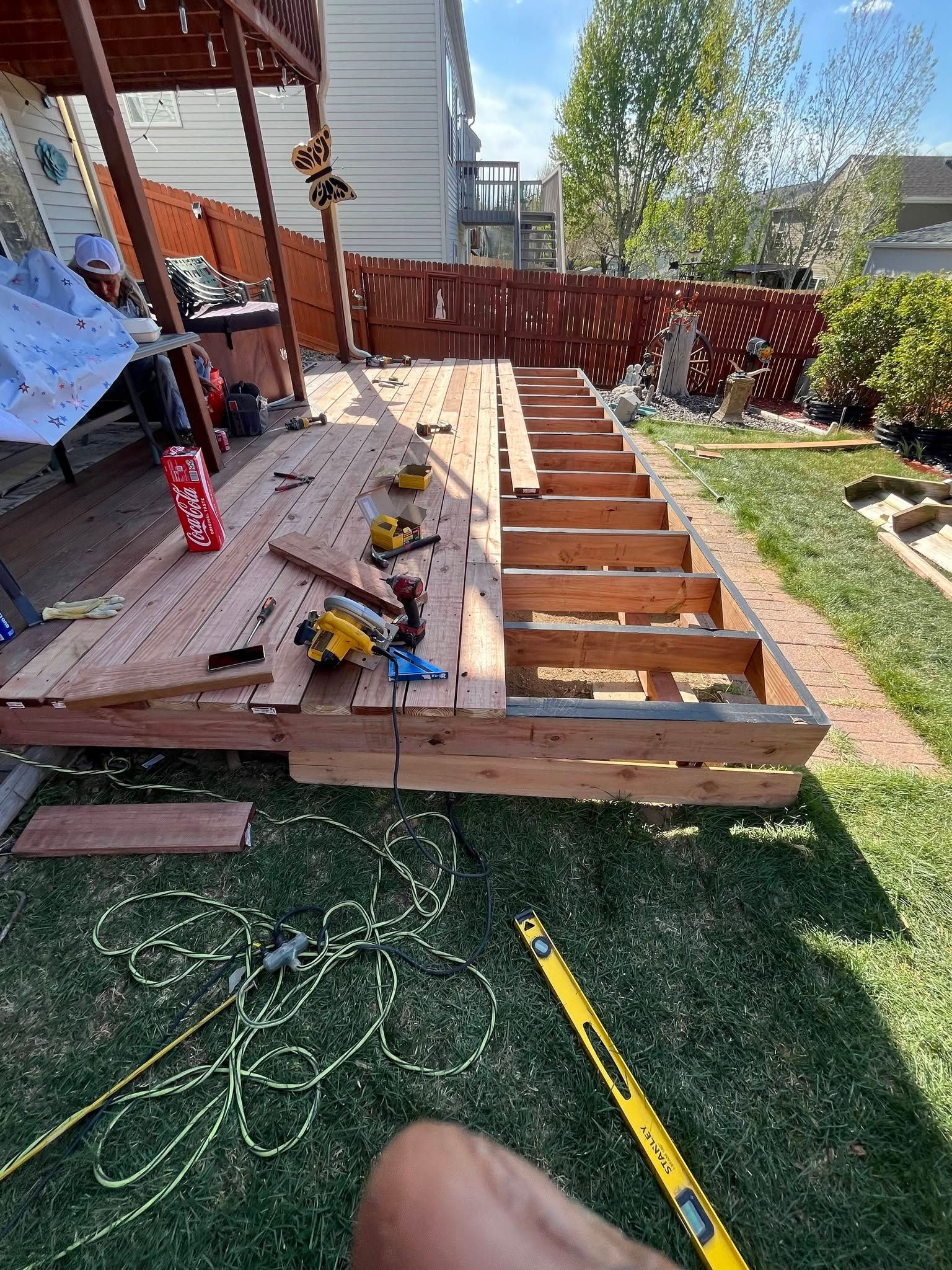
When deck boards feel spongy underfoot or fastener heads stand raised above the surface after winter, the freeze-thaw cycle has done measurable damage to structural connections and wood integrity. M&A Handyman and Remodeling repairs residential decks in Harrisburg with structural expertise developed through decades of carpentry work, diagnosing problems on-site rather than defaulting to full replacement when partial fixes restore safety and function. Freeze-thaw cycles in South Dakota cause ice to form inside wood grain and fastener holes, expanding those spaces and weakening the connections that hold railings, joists, and decking together.
Structural assessment identifies which components require replacement and which still provide adequate support once fasteners are upgraded or reinforced. Material choices account for climate durability—pressure-treated lumber rated for ground contact in freeze zones, composite decking that resists moisture absorption, and fasteners with coatings that prevent rust jacking as metal corrodes inside wood. Phased repair strategies avoid the cost of total teardown when targeted board replacement and joist reinforcement extend useful life for several more seasons.
Request a deck inspection to determine whether repair or replacement makes sense for your structure's condition.
How Deck Repairs Address Freeze Damage
The process begins with load testing questionable sections—applying weight to boards and railings to identify flex points where joists have lost bearing strength or ledger boards have separated from the house structure. Fastener holes that have enlarged through freeze-thaw movement get filled with epoxy or relocated to undamaged wood, and corroded hardware is replaced with galvanized or stainless options that resist the salt and moisture exposure common in Dakota winters.
Once repairs are complete, you will notice that railings no longer shift when gripped, deck boards sit flush without raised edges that catch snow shovels, and the structure feels solid underfoot without the bounce that indicates compromised joist spacing or inadequate blocking. Stain and seal treatments applied after structural work protect wood surfaces from moisture infiltration that accelerates the next round of freeze-thaw damage.
Repair scope depends on the deck's age and original construction quality; spec-home decks built during development booms often used minimum fastening patterns and skipped joist hangers at critical connections, requiring more extensive reinforcement than decks built with redundant structural support. The owner's background includes correcting builder shortcuts on outdoor structures, which means recognizing where corners were cut and adding the hardware or framing that should have been installed originally.
Answers to Frequent Service Questions
Homeowners dealing with deck damage want to know whether repair makes financial sense compared to replacement, and what specific failures indicate structural risk versus cosmetic wear.
What causes deck fasteners to fail in Harrisburg?
Water enters fastener holes and freezes, expanding the hole diameter and loosening the grip between screw threads and wood fibers; repeated freeze-thaw cycles over multiple winters eventually allow fasteners to pull free under load, which is why railings and board edges show movement first.
How much deck damage requires full replacement instead of repair?
When more than forty percent of joists show rot or insect damage, or when the ledger board attachment to the house has failed across multiple fastener locations, replacement becomes more cost-effective than attempting to sister joists and re-anchor structural connections that have lost integrity throughout the frame.
Why do composite decks still need maintenance?
Composite materials resist moisture absorption and rot, but the fasteners and underlying joist structure remain wood and metal components vulnerable to freeze-thaw movement; composite boards can also expand and contract with temperature swings, requiring gap adjustments and fastener checks to prevent buckling.
When should deck repairs be scheduled?
Spring assessments catch damage from the previous winter before summer use begins, allowing repairs to proceed during dry weather when wood moisture content is lowest and adhesives or sealants cure properly; fall repairs prepare structures for snow load and ice accumulation.
What does a half-day deck repair typically include?
Jobs in the five-hundred to one-thousand dollar range cover board replacement on sections smaller than fifty square feet, railing reinforcement with upgraded hardware, joist sistering to restore bearing strength, or stair tread replacement where rot has compromised step integrity.
M&A Handyman and Remodeling recently completed six jobs in one week, reflecting the capacity to move quickly through smaller repair projects without sacrificing the structural evaluation that prevents callbacks. Arrange an on-site assessment to review your deck's condition and receive a scope recommendation based on what you actually need rather than a default replacement quote.